
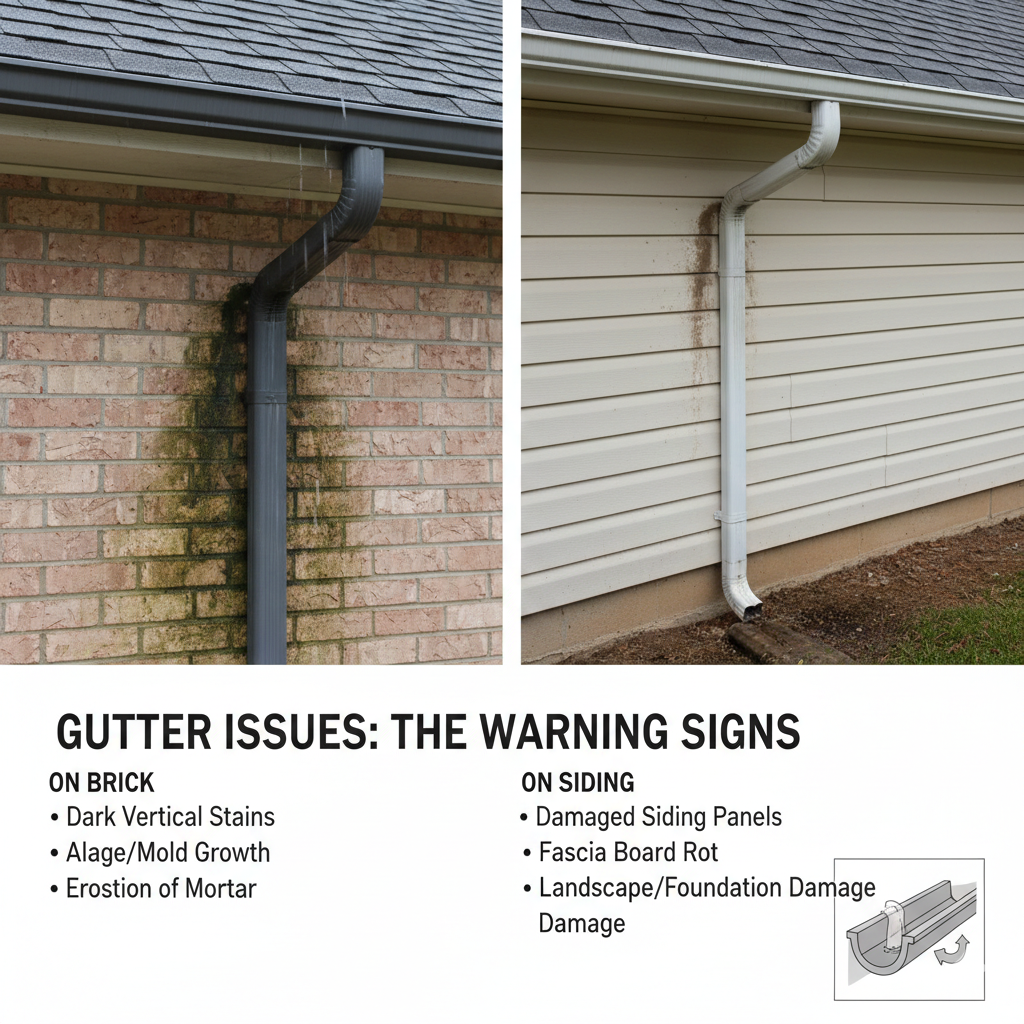
How Water Trails on Brick or Siding Signal Gutter Issues
Rainwater should flow smoothly from your roof through your gutter system and down the downspouts to a safe distance away from your home’s exterior. When that system fails to work as it is created to, water can take alternative paths. One of the most visible early warning signs of gutter trouble is the appearance of water trails on brick or siding. These streaks aren’t just cosmetic; they reveal that water is repeatedly hitting your home’s walls instead of being effectively carried away.
What Water Trails Really Indicate
Water trails show that water has been running down the surface in the same pattern rain after rain. This usually means water is overflowing or being misdirected, instead of being collected and routed through your gutter system. Common causes include clogged gutters, improper slope, or downspouts discharging too close to the wall.
Overflow often happens when leaves, twigs, and debris accumulate in the gutter channel. When rainwater can’t flow freely, it backs up and spills over the edge, cascading down the face of the home. Over time, this repeated flow leaves visible trails or staining on brick or siding surfaces.
Why These Stains Matter More Than Appearance
It’s easy to dismiss streaks on brick or siding as cosmetic blemishes. But they are symptoms of an underlying water management failure. Water that repeatedly runs down exterior walls can cause a host of issues:
Common Causes of Water Trails
There are a few typical reasons water ends up on surfaces it shouldn’t:
Early Detection Saves Money
Noticing water trails after rainstorms gives homeowners a chance to catch problems early, before they escalate. Simple gutter cleaning, checking alignment and slope, and extending downspout discharge points can all help redirect water where it belongs. Regular maintenance ensures your gutter system continues to protect your home’s exterior and foundation.
Conclusion
Water trails on brick or siding aren’t just marks to clean off; they’re signals of compromised water flow. Addressing the cause promptly prevents unsightly stains and preserves the integrity of your home’s exterior and structure. Watching where the water flows after a storm and acting on what you see can save you from more costly damage down the road.


