
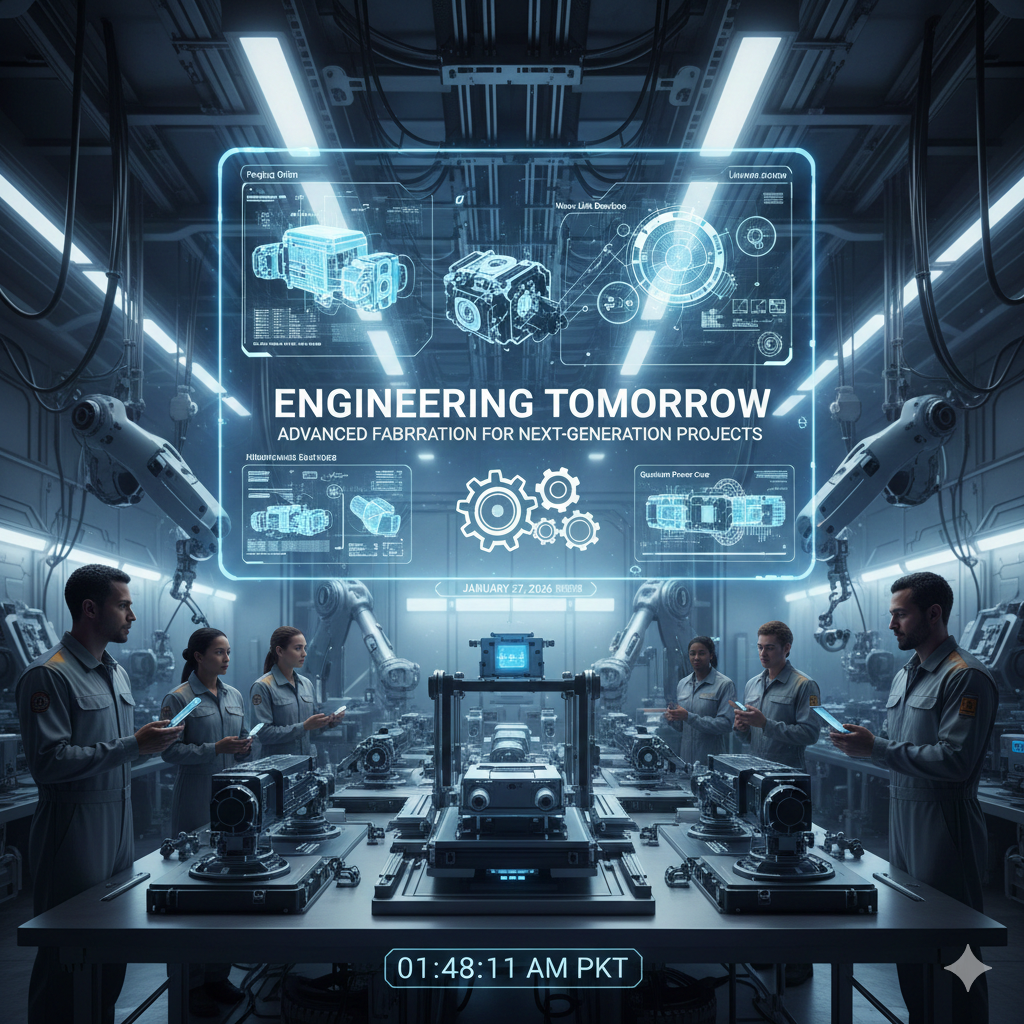
Engineering Tomorrow: Advanced Fabrication for Next-Generation Projects
The construction and fabrication industries are undergoing a significant transformation as advanced technologies redefine how complex projects are conceived, engineered, and executed. For next-generation builds advanced fabrication plays a central role in achieving precision, efficiency, and innovation. These capabilities extend far beyond traditional metalwork, integrating digital planning, automation, and data-driven processes that collectively shape the future of engineering.
Digital Design Drives Precision
Modern fabrication begins long before steel is cut or welded. Digital tools like Computer-Aided Design (CAD) and Building Information Modeling (BIM) are now foundational to project planning. These platforms allow engineers and designers to visualize entire structures, test assemblies, and simulate performance before physical fabrication begins. By identifying clashes or design issues early, digital planning reduces errors and ensures that each component fits seamlessly during installation.
Integrating digital workflows also promotes better coordination across disciplines. Engineers, fabricators, and field teams access the same digital model, enabling real-time decisions that maintain alignment from concept through construction. When every collaborator works from a single source of truth, fabrication planning becomes more predictable and responsive to evolving project needs.
Advanced Machinery and Automation
At the heart of advanced fabrication is automation. Robotics, CNC machines, and laser cutting technologies have revolutionized how materials are shaped and assembled. CNC systems execute precise cuts and forms based on digital instruction sets, while robotic welders and automated cutting platforms provide unparalleled repeatability and speed. These technologies reduce human error, improve safety, and ensure consistent quality across large production runs.
Laser cutting, for example, enables ultra-precise edges and intricate shapes that traditional tools struggle to achieve. By using focused energy to slice through steel and other materials, laser systems deliver high accuracy with minimal waste, enhancing both the structural performance and aesthetic quality of fabricated components.
Automation and Smart Systems
Beyond individual machines, fabrication facilities are embracing broader automation strategies that incorporate artificial intelligence (AI), sensors, and real-time data analytics. These smart systems monitor machine performance, predict maintenance needs, and optimize workflows for maximum efficiency. Robotics equipped with advanced sensors can autonomously adjust paths or techniques based on material feedback, enabling custom fabrication runs at scale without sacrificing precision.
This automation also supports safer environments by reducing manual handling of heavy or hazardous components. Autonomous Guided Vehicles (AGVs) and other material-handling robots contribute to smoother plant operations, allowing human teams to focus on higher-value tasks that require specialized judgment and creativity.
Innovation Through Prototyping and Modeling
Rapid prototyping techniques play a vital role in advancing engineering projects. By quickly producing test parts or scale models, teams can refine designs before committing to full fabrication. This approach accelerates development cycles and drives innovation, particularly for complex geometries or customized solutions that push the boundaries of conventional fabrication.
Prototyping also supports sustainability goals by minimizing material waste and enabling design exploration without expensive trial-and-error in the shop. The result is a more flexible fabrication process.
Conclusion
As engineering challenges grow more complex, advanced fabrication will continue to be a critical enabler. Digital design, automated production, and data-driven decision-making empower teams to deliver next-generation projects on time, under budget, and with greater precision than ever before. This fusion of innovation and engineering excellence lays the foundation for the built environment of tomorrow.